
How to Create a Personalized Exam Study Schedule for College Students in New York?
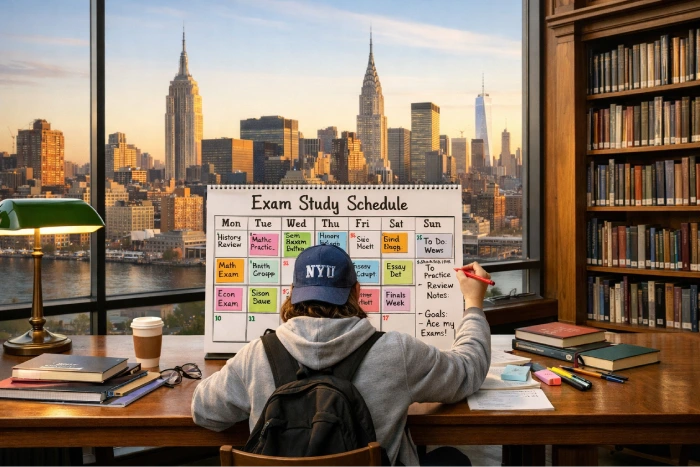
A personalized exam study schedule for college students in New York should work backward from confirmed exam dates and fit around the time you actually have, including commuting, classes, and home responsibilities. Instead of copying a generic planner, map fixed commitments and turn smaller gaps into realistic study blocks. This approach suits students at CUNY, SUNY, and private colleges who may spend 45- 90 minutes commuting or working before and after class.
A practical room also leaves room for delays, changing shifts, and limited study space. This guide to academic success in New York universities will help you do broader planning while managing your other obligations, as well.
Why Generic Study Schedules Don’t Work for Many New York Students?
Generic study schedules often assume students have quiet rooms, predictable evenings, and several uninterrupted daytime hours. That is not how New York students spend their week. A 45-90 minute commute can remove the time a planner labels “free”, while part-time or full-time work may shift around classes. CUNY and SUNY campuses may also differ in library hours, quiet-space availability, and room-booking systems, so one campus routine cannot fit everyone, CUNY SUNY exam schedule planning should be personalized to one’s requirements.
Shared apartments and busy dorms create another problem; even at home, focused study may be difficult. Building a schedule around your actual environment and developing study habits that improve academic performance will help you achieve your goals.
Map Your Fixed Time Blocks First
If you don’t know how to study for exams while doing other jobs, make a weekly map of everything that is difficult to move before selecting study topics. Include any classes, labs, clinicals, discussions, job shifts, family or caregiver responsibilities, appointments, and ongoing obligations. Then, rather than utilizing a ballpark estimate, figure out your actual door-to-door travel. Make a note of locations where you can consistently study, including a home desk, university lounge, or library.
Because they simply consider it as travel time, students frequently undervalue commuting. Consider each commuting segment that lasts 20 minutes or more as a legitimate study block that may be scheduled. While it can support audio review, flashcards, definitions, formulae, and recall practice, it might not be able to enable sophisticated problem-solving. This is how graduate students balance research, work, and exams, side by side.
Turn Commute Time Into Structured Study Time
Once you’ve scheduled your commute, don’t just decide to “study on the train,” but give each trip a clear academic goal. While standing or moving, record yourself reading important definitions, formulae, terminology, or brief explanations. To prevent an underground connection from interfering with review, keep flashcards offline. For easy phone access, you may also take pictures of class slides or handwritten notes.
Align the work with the circumstances of the commute and try to find the best time to study commutingNYC, accordingly. While a busy subway journey is ideal for brief memory questions or audio, a seated, calmer travel can enable reading-heavy review. For a reliable study space, keep challenging writing, math, and novel ideas. The objective is to make regular commuting time productive without wearing yourself out before work or class, not to convert every commute into homework. This preserves your greatest mental energy for challenging schoolwork later in the day while keeping your commute productive.
Build Your Schedule Backwards From Your Exam Dates
Start with the dates that are truly important and work your way backward through the schedule. Instead of presuming that all finals take place in the same week, start with your syllabus, learning platform, or official course information and validate each exam date. Then, for a standard course test, count back three to four weeks. A longer runway can be required for a certification or licensing exam.
For the optimal exam prep schedule working students, should use these easy steps:
- List every exam and its confirmed date
- Mark the first review week for each subject
- Place review sessions inside the fixed block you identified, including commute periods
- Give the longest focused sessions to difficult or heavily weighted material
- Use shorter blocks for recall, flashcards, formulas, and revision
- Rebuild the following week when work shifts, classes, or commuting patterns change
If you are a working NYC student, don’t follow a single, unflexible strategy to last the full semester. For working students, a weekly reset is more practical. Here, free NYSTCE practice test questions might also assist you in organizing focused practice if an exam calls for a standardized test component.
Choose Study Locations That Actually Work in NYC
Your study space should be appropriate for the kind of work you have to do. Verify the library’s hours on your particular school, especially if extended or round-the-clock access is provided during exams; these policies differ depending on the university. Before the busiest test periods, find out how to reserve quiet or group rooms on your campus.
Choose a New York Public Library branch or another public library close to your home or place of employment as a backup if campus space is not available. Lighter chores can be completed at a coffee shop, but keep in mind the expense of purchases, noise, seats, and travel time. The ideal site is one that you can reliably go to and utilize for the work you have booked, not necessarily the quietest spot in the city.
Build In Buffer for Things Only NY Students Deal With
As delays and unforeseen changes may easily ruin a tightly packed schedule, New York timetables require buffer time. Around significant bus or metro connections, allow an extra 15 to 30 minutes, especially if travel may be impacted by winter weather. If a work shift is extended or switched, have one extra study block on hand.
Before leaving dependable Wi-Fi, download the necessary texts, presentations, and flashcards. In this manner, a scheduled review session is not automatically canceled due to an underground connection issue. After one challenging day, buffer time keeps the timetable from becoming unfeasible.
Sample Weekly Schedule for a Working NY Commuter Student
This is how a working commuter may spend a workday:
- Commute from 7:40 to 8:10 a.m. while listening to lecture audio.
- Classes run from 9:00 a.m. to 12:00 p.m.
- Work from 12:30 to 4:30 p.m.
- Use offline flashcards on your ride home from 5:00 to 5:30 p.m.
- Focused study at home or in a library from 6:00 to 7:30 p.m.
- Dinner, relaxation, and personal time after 7:30 p.m.
Through this study schedule template college students New York will get the results they want. Not only they will focus on studying, but also balance their work equally.e
FAQ Section
How do I make a study schedule if I have a long commute in NYC?
Make use of the commute for activities that fit your environment. On crowded transit, audio review, flashcards, definitions, formulae, and rapid recall are effective. Essays, computations, and challenging new stuff should be saved for a quiet place.
How far in advance should I start a study schedule for finals?
Start a systematic review three to four weeks before a normal course test. If the content is cumulative, the exam accounts for a significant portion of your grade, or you are getting ready for a certification or licensing exam, start earlier.
What should I do if my work schedule changes week to week?
Don’t impose a set schedule for the entire semester. Create a weekly schedule and adjust it when shifts change. Maintain adaptable study blocks that may be rescheduled for a different day.
Where can I study on campus if my apartment is too crowded?
Since different institutions have different hours, extra finals access, quiet places, and room reservations, check your campus library first. Choose a public library in the area as a backup if campus space is filled.
How much buffer time should I add for MTA delays or bad weather?
Around significant transit connections, a 15- to 30-minute cushion is a sensible place to start. When delays are probable due to weather, transfers, or a lengthy trip, add extra. Avoid scheduling a crucial study session just after a tight connection; instead, have a backup block ready.
Conclusion:
A realistic strategy can make available time work harder, but it won’t make a tough New York week go away. Check out our other New York student success guides for more test and certification preparation tips. Get in touch with us for advice on exam preparation!